
Area of expertise
Physiotherapy at the practice
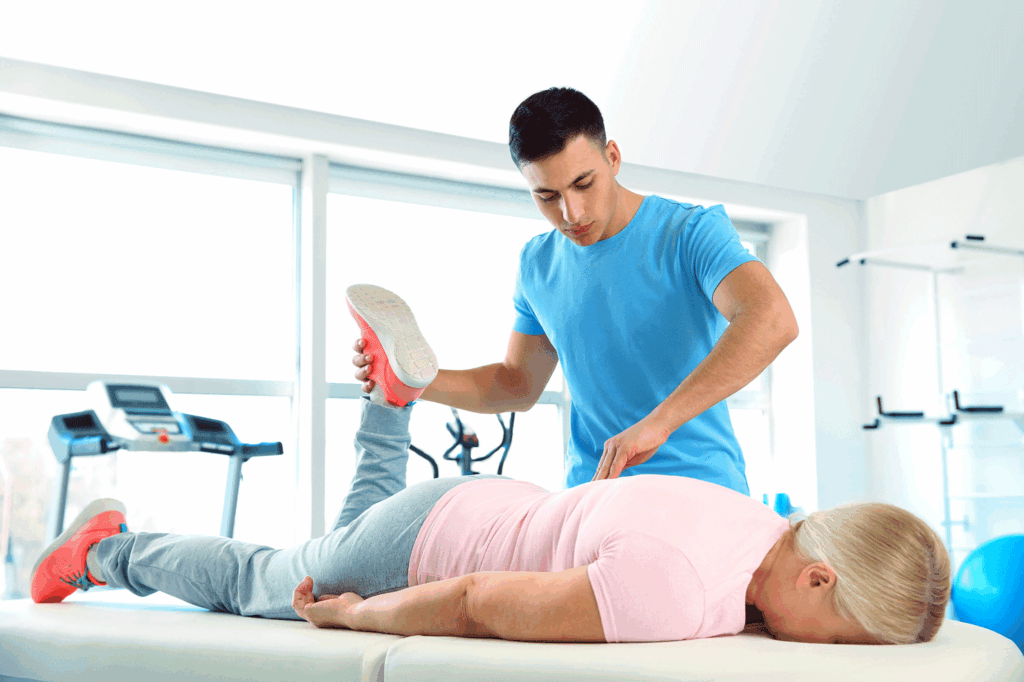
Physiotherapy at the practice is the most common form of treatment. At start.physio, our patients receive personalised care in a professional and welcoming environment.
When is physiotherapy at the practice recommended?
Physiotherapy at the practice is the most common form of treatment.
At start.physio, our patients benefit from individual support in modern, bright spaces equipped with professional equipment suited to every need.
Our physiotherapists see you by appointment to assess your situation, draw up a personalised treatment plan and guide you towards a lasting recovery.
Who is it for and when is physiotherapy at the practice recommended?
This type of care suits most patients, in particular:
- During rehabilitation after an injury or an operation
- In case of muscle, joint or postural pain
- To improve mobility, strength or coordination
- To return to physical activity or sport safely
- For preventive follow-up or to maintain physical fitness
Our practices are accessible to everyone, with spaces adapted to adults, children and people with reduced mobility.
What are the benefits of treatment at the practice?
the BENEFITS
- Professional supervision and regular follow-up
- Access to a wide range of techniques and therapeutic equipment
- Optimal conditions for safe exercise
- Ability to assess progress precisely and adjust sessions
- A calm, caring atmosphere that supports recovery
Each session respects your goals, your pace and your comfort.
How does the treatment work?
A personalised approach
At your first visit, the physiotherapist carries out a comprehensive assessment: interview, observation and functional tests.
They then define a tailor-made treatment plan, which may include:
- Manual techniques and mobilisations
- Supervised therapeutic exercises
- Work on posture, breathing and coordination
- Use of specific equipment (treadmill, exercise bike, strength training, electrotherapy, etc.)
Physiotherapy after an accident
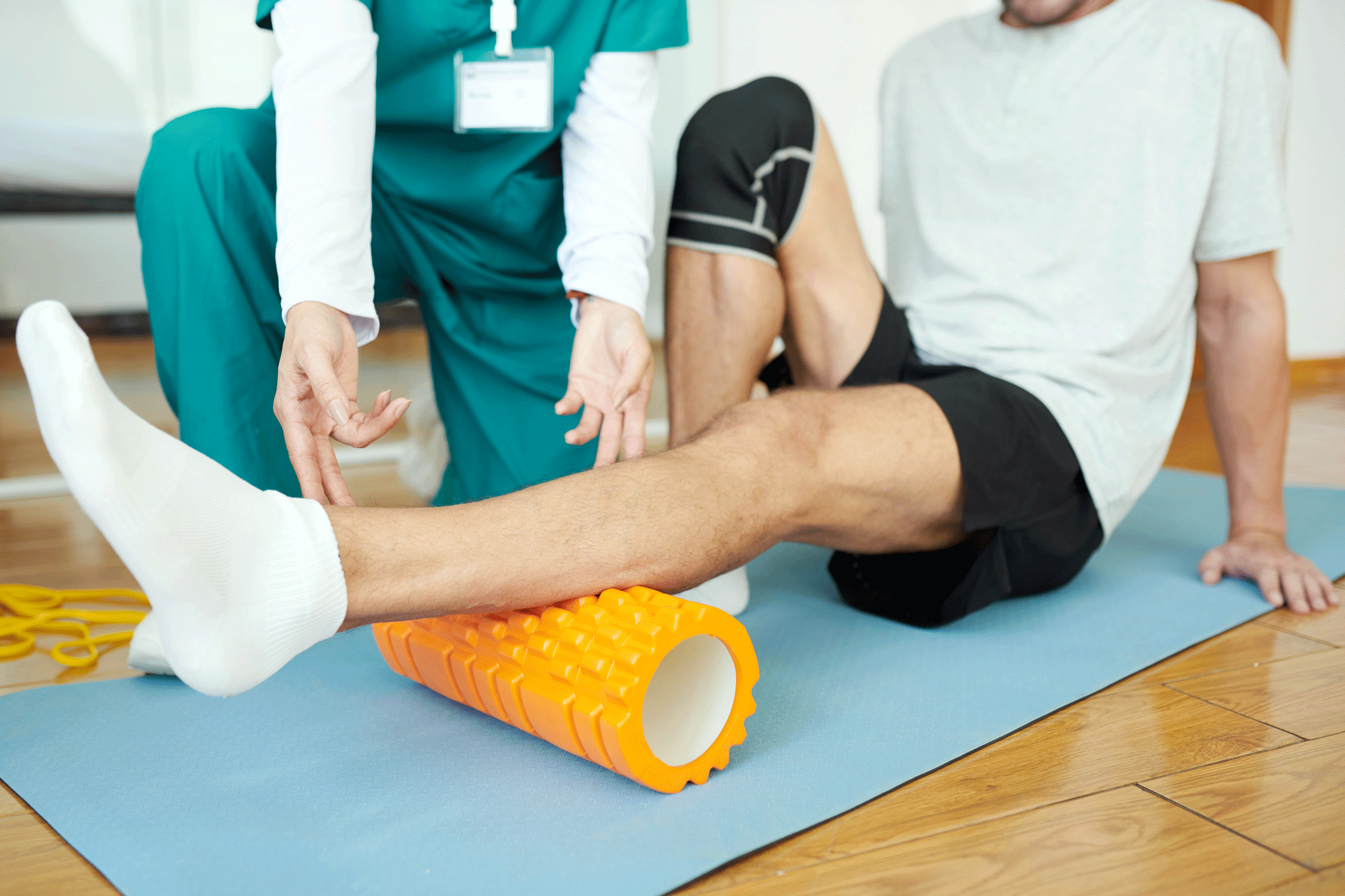
Physiotherapy plays an essential role in recovery by helping to relieve pain, restore mobility and strengthen muscles and joints, so that you can regain optimal independence and avoid long-term after-effects.
An accident can happen at any time and cause injuries that directly affect mobility, strength and quality of life. Whether it is a sprain while running to catch a train, a fall while skiing, a slip on the snow or a cycling accident, these injuries require appropriate care to avoid complications and restore optimal function.
Physiotherapy plays an essential role in recovery by helping to relieve pain, restore mobility and strengthen muscles and joints, so that you can regain optimal independence and avoid long-term after-effects.
What types of injuries do we treat?
- Fractures and prolonged immobilisation: rehabilitation after a cast or splint to regain mobility and muscle strength.
- Sprains and ligament injuries: stabilisation and strengthening after an ankle, knee or wrist injury.
- Bruises and muscle haematomas: drainage and recovery to limit pain and prevent stiffness.
- Back and neck injuries: treatment of pain caused by impacts (whiplash, herniated disc).
- Post-traumatic surgery: rehabilitation after an operation on ligaments, bones or muscles.
- Post-traumatic neurological rehabilitation: support after an accident affecting the nervous system (stroke, head injury, spinal cord injury).
How does the treatment work?
After an in-depth assessment, the physiotherapist draws up a personalised programme based on the type of injury and the expected level of recovery. Treatment may include:
- Management of pain and inflammation using appropriate techniques (gentle mobilisation, manual therapy).
- Gradual rehabilitation of mobility and muscle strength to prevent stiffness and compensations.
- Functional rehabilitation exercises to regain everyday movements and prevent recurrences.
- Balance and posture work to relearn how to walk or move safely.
The aim is to help the patient gradually recover their physical abilities and return to normal life with confidence.
Physiotherapy after surgery
Physiotherapy after surgery supports patients in their recovery by improving mobility, muscle strength and joint stability.
After surgery, appropriate rehabilitation is essential to recover more quickly and avoid complications. Physiotherapy after surgery supports patients in their recovery by improving mobility, muscle strength and joint stability.
It is aimed at patients who have undergone orthopaedic, trauma or reconstructive surgery, with the goal of returning to optimal function.

What types of surgery are concerned?
- Orthopaedic surgery: planned operations to correct conditions or deformities of the musculoskeletal system.
- Mainly concerns joint replacements (hip, knee, shoulder), rotator cuff repairs, carpal tunnel surgery and osteotomies to realign a limb.
- Physiotherapy is essential to regain mobility and avoid postural compensations.
- Trauma surgery: carried out after an accident or injury requiring urgent repair.
- It includes fixing fractures with plates and screws, repairing the cruciate ligaments of the knee (ACL) and stabilising a dislocated shoulder.
- Rehabilitation then helps speed up healing, prevent muscle loss and restore optimal function.
- Reconstructive surgery: restoring function or appearance after significant tissue damage
- After cancer (e.g. breast reconstruction after mastectomy), an accident (e.g. skin graft after a burn) or nerve damage affecting mobility.
- In these cases, physiotherapy helps reduce scar adhesions, regain mobility and restore natural movement.
How does the treatment work?
Each patient receives gradual, tailored care depending on their operation:
- Pain management and reduction of muscle tension.
- Rehabilitation of joint mobility to prevent post-operative stiffness.
- Gradual muscle strengthening to stabilise the operated joint.
- Functional rehabilitation to relearn everyday movements and prevent recurrences.
The aim is to help the patient gradually regain their independence, avoid post-operative complications and resume their daily activities safely.
Why is it important to get treatment?
Without appropriate treatment, pain, an injury or an operation that has not been properly rehabilitated can get worse and lead to limitations, stiffness or chronic pain. Physiotherapy helps restore mobility, strengthen muscles and prevent new complications, whether after an accident, surgery or in the case of everyday physical problems.
For the sessions to be covered by your health or accident insurance, a medical prescription is required. If you experience pain, loss of mobility or persistent difficulty moving, talk to your doctor to assess whether physiotherapy is needed and to support a lasting recovery.
Book
an appointment
today and

tomorrow.
They trusted us
Patient reviews, just as they left them.
★★★★★
Ana looked after me during my postpartum period: a gentle, professional and very knowledgeable physiotherapist whom I highly recommend!
CCindyBex
★★★★★
Excellent professionals; I had a great experience and was able to recover. I loved the new space and how close it is to the station and the village centre. Highly recommended!
RSRita S.La Tour-de-Peilz
★★★★★
A very good physio with lots of patience for children!
MDMafalda D.Roche
★★★★★
Great team! Thank you for looking after my 91-year-old mum. Since your care, she gets around indoors without her canes and does the exercises she learned every day. Thank you.
AFAngela F.Bex
★★★★★
I received excellent follow-up, with very, very good results 👌 A truly professional team. Highly recommended.
GGGabriel G.Monthey
Your questions
Answers to the questions you ask us most often.
Do I need a prescription?
Yes. For your sessions to be covered by your health or accident insurance, you need a medical prescription.
Does my insurance cover the sessions?
Illness: basic health insurance (LAMal). Accident: accident insurance (LAA). In some cases: disability insurance (LAI) or military insurance (LAM).
Do you offer home visits?
Yes, for people whose health prevents them from coming to a practice, and in nursing homes (EMS). A specific prescription for home physiotherapy is required: the doctor must write “at home” on it.
Can I cancel or reschedule an appointment?
Yes, but please let us know at least 24 hours in advance. Appointments missed without notice may be charged.