
Technique
Kinesiotaping
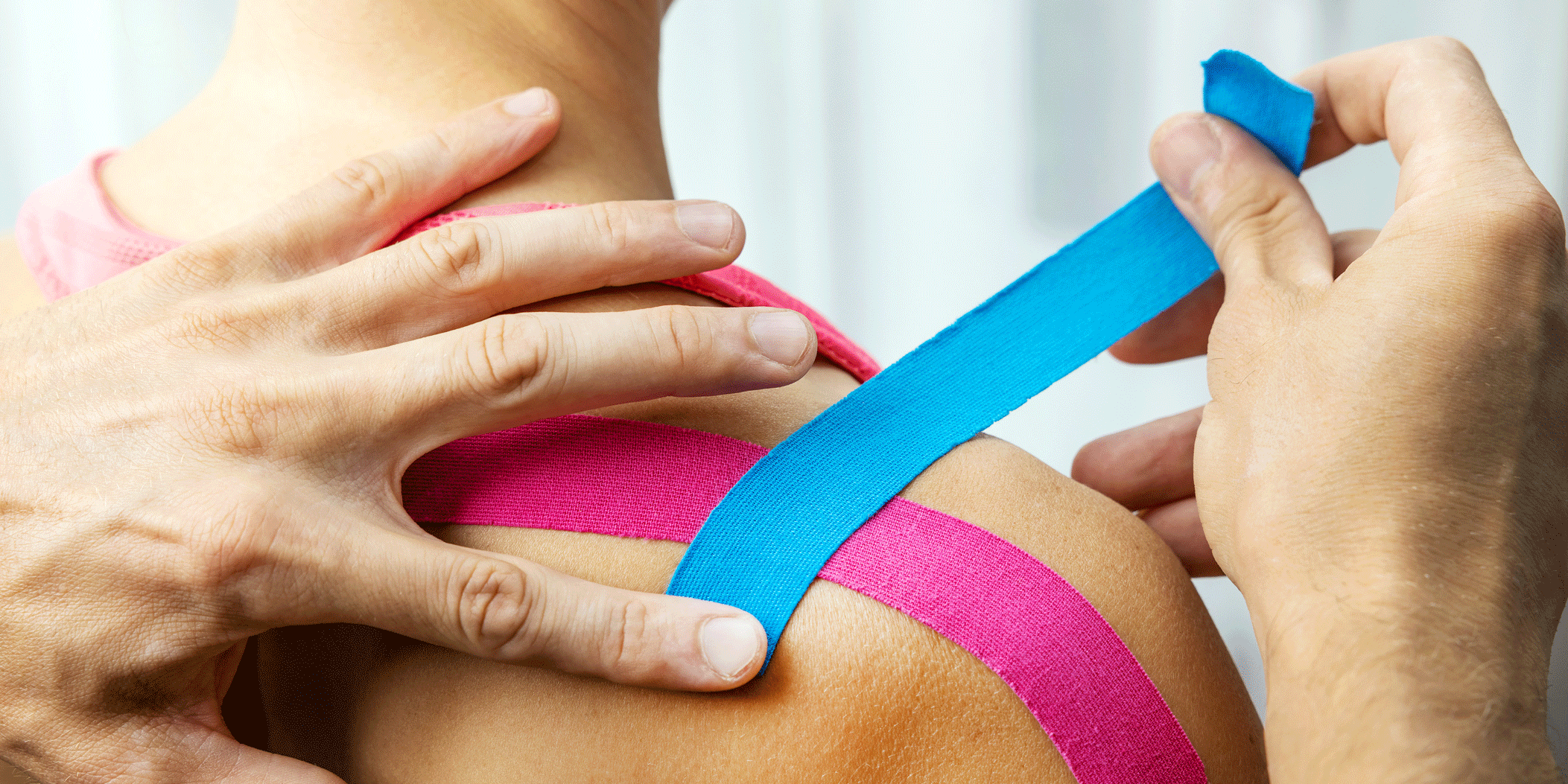
Kinesiotaping applies gentle tension to muscles and joints using elastic adhesive tape, to relieve pain, improve blood and lymphatic circulation and provide joint support while preserving freedom of movement.
The technique
What is kinesiotaping?
Kinesiotaping is a therapeutic taping method using special elastic adhesive tapes designed to mimic the elasticity of the skin. Applied to muscles or joints, they exert a gentle tension that helps to:
- Reduce pain and muscle tension.
- Improve blood and lymphatic circulation by helping to drain swelling (oedema).
- Support the joints without limiting mobility.
This technique is particularly valued in functional rehabilitation and sports medicine.
Your doctor or physiotherapist may recommend kinesiotaping to support muscles and joints, reduce pain and improve blood and lymphatic circulation. This technique uses elastic adhesive tapes that work without restricting movement, providing effective support while promoting optimal recovery.
Who is it for?
Indications and contraindications
✅
Indications
When is kinesiotaping recommended?
Kinesiotaping is indicated in a number of situations, including:
- Muscle and tendon pain (muscle knots, tendinitis, strains).
- Joint instability (mild sprain, unstable knee, painful shoulder).
- Postural support (correcting muscle imbalances, back pain).
- Recovery after an injury or surgery.
- Swelling and bruising (improved lymphatic drainage).
- Injury prevention during physical activity and sport.
⚠️
Contraindications
When is kinesiotaping not recommended?
Although generally well tolerated, kinesiotaping is contraindicated in certain cases:
- Allergy to adhesives or skin reactions.
- Open wounds or skin infections in the area to be taped.
- Deep vein thrombosis (risk of embolism).
- Swelling due to severe heart failure.
Before the tape is applied, a physiotherapy assessment is needed to determine the best application technique.
Kinesiotaping can be combined with other treatments such as manual therapy, electrical stimulation or TECAR therapy to maximise its effects.
The benefits
Kinesiotaping in Physiotherapy
Less pain and greater muscle comfort.
Joint support without limiting movement.
Improved circulation and lymphatic drainage.
Long-lasting effect (water-resistant tapes that can be worn for several days).

At start.physio, our specialised physiotherapists use kinesiotaping alongside rehabilitation to optimise recovery and improve joint and muscle stability. For physiotherapy sessions to be covered by your health or accident insurance, a medical prescription is required.
Our practices
Where can I get kinesiotaping?
Kinesiotaping is available at the following start.physio practices:
Techniques and equipment
We use a range of treatment techniques and specialised equipment to speed up recovery.
We’ll call you back
Book an appointment today and start.physio tomorrow.
Leave your name and number: our team will contact you within 24 hours (excluding weekends) to book your appointment at the practice of your choice.
Your questions
Answers to the questions you ask us most often.
Do I need a prescription?
Yes. For your sessions to be covered by your health or accident insurance, you need a medical prescription.
Does my insurance cover the sessions?
Illness: basic health insurance (LAMal). Accident: accident insurance (LAA). In some cases: disability insurance (LAI) or military insurance (LAM).
Do you offer home visits?
Yes, for people whose health prevents them from coming to a practice, and in nursing homes (EMS). A specific prescription for home physiotherapy is required: the doctor must write “at home” on it.
Can I cancel or reschedule an appointment?
Yes, but please let us know at least 24 hours in advance. Appointments missed without notice may be charged.